

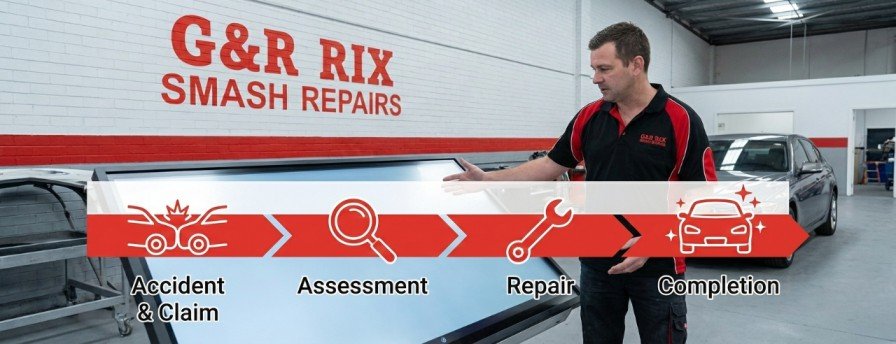
Having a car accident? Wondering what happens next? And what will be the car insurance claim timeline? Whether it’s a minor or a serious crash, approval of claim timelines adds another layer of stress and frustration. It seems like an overwhelming process filled with paperwork, phone calls, and long waiting.
But understanding the process helps you to set realistic expectations and avoid unnecessary delays and stress. So, in this blog, we’ll cover everything from the overview of the timeline to the approval process. We’ll also explore why timelines lead to delays and at-fault and not-at-fault claim process timelines, and how to handle claim disputes if they arise.
Overview of the Car Insurance Claim Timeline
How long does an insurance claim take
The timeline of smash repair insurance claims may vary based on different factors. On average, the auto insurance claim gets approved within a few days to a couple of weeks if your car is involved in a minor accident with a clear liability and no injury. However, the claim approval process takes more time when your vehicle experiences serious damage, injuries, or disputed liabilities. Usually, insurance companies will respond within 30 days after reviewing your case. It is also important to provide insurance companies with all the documentation quickly and to fully cooperate with them to speed up the process.
Factors that affect claim time frames
Every vehicle may not experience the same accident. The following are several factors that decide how long the smash repair insurance timeline will be.
-
Vehicle damage
If your car is involved in a minor accident, then the claim time frame will be two weeks or less. However, if your vehicle needs a complex repair due to extensive damage, then the evaluation process may take longer than expected.
-
Severity of injuries
If the accident results in severe injuries, then the claim may take longer to resolve. As completed medical treatment is necessary to finalize the settlement. However, insurers may delay the payment until they have a clear picture of long-term medical expenses.
-
Liability disputes
If it’s not clear whether it is an at-fault claim or not an at-fault claim, then it significantly extends the timeline. Insurance companies take time to resolve the settlement by reviewing traffic laws, police reports, and witness statements. However, if the dispute includes multiple parties, the claim process is further delayed due to negotiations between different insurers.
-
Workload of insurance companies
Insurance companies’ workload also impacts the claim process timeline. A high volume of work slows down the processing from accident to repair timeline. It means your insurer is dealing with a backlog due to pending tasks, policy application updates, or a high volume of queries and emails waiting for a response.
-
Your cooperation
You can speed up your accident claim repair process through a prompt response. Delays in paperwork submission, including repair estimates, medical records, and official accident reports, can also extend the overall process timeline.
At-fault vs. not-at-fault claim timelines
At-fault claim timelines typically take longer to resolve, from several weeks to months, due to liability disputes, reviewing injuries, and police reports. However, the not-at-fault insurance repair time frame is usually shorter, a few days to weeks, than at-fault claims, as it only includes simple property damage. But remember, heavy crashes and multiple injuries can further extend the timeline. So, prompt reporting is essential to avoid claim denial or any other objection.
Car Insurance Claim Timeline Breakdown: Insurance Claim Process Car Accident
After having an accident, promptly report the incident to your insurance company. These car accident insurance steps include reporting your incident, then your insurer issues a claim number, and you receive the assigned claim adjuster. Then you provide the basic details about the incident to the adjuster to further proceed with the insurance claim process.
Claim Lodgment and Initial Review
After submitting your claim, the adjuster will review details, including police reports, vehicle damage, witness statements, liability, and medical records if injuries are included. This car insurance claim step usually takes 3 to 15 days, as it requires a detailed investigation to proceed to assessment. However, the period may extend longer in case of disputed liability, major injuries, and complex damage.
Insurance Assessment Timeline
In this step, the adjuster will assess the damage and what repairs are needed for your vehicle. An adjuster or a repair shop will do a loss assessor inspection to provide insurers with clear repair estimates and assessment reports. Many insurance companies work with their preferred repairers for the quick processing of smash repair insurance claims. However, if you use an independent shop, the process of approval may take longer. This step usually takes 3 to 15 days to complete.
Repair authorization
It is a stage when your insurer receives the repair quote and assessment report. The insurance will assess the damage and check the policy terms to confirm whether the costs are reasonable or not. Minor damage approval takes a few weeks. However, complex damage, extra inspection, and clear coverage may extend the repair authorization timeline.
Medical Review For Major Injuries
If your accident involves severe injuries, then the timeline extends significantly. In this step, insurance companies need medical documentation and treatment plans to assess the compensation for medical expenses.
Claim Approval Process
After determining liability and damages, the insurance company will approve your claim and proceed to a settlement offer. This process takes one week to several months. You can accept the offer or repair quote if it is fair and receive the amount. However, if the amount is insufficient or lower than expectations, you can negotiate before the repair quote approval. This negotiation will also impact the insurance repair approval time and may extend it further. Many insurance companies initially offer less than expected to allow room for negotiation.
After negotiation and agreeing on the fair amount, the insurer will issue the agreement. Be sure to read the policy terms and conditions before signing the agreement. Additionally, you will get the agreed-upon estimated amount within two weeks of approval.
Hire Car Duration During Repairs
Upon claim approval, your insurance provider gives you hire car cover depending on the level of cover you have and the type of claim you made. Many insurance companies deliver this rental vehicle within 24 hours of approval, which lasts while your car is being repaired. However, the following are certain requirements to get a rental car from your insurance provider.
- You must have comprehensive car insurance.
- Your vehicle must be involved in an accident in which damage occurs.
- Only not-at-fault claims are eligible for hire car cover.
What To Do If The Car Insurance Claim Timeline Takes Longer Than Expected
The insurer repair process takes longer than the above-mentioned timelines, so the first step is to get clear answers. Contact your insurer and the repairer regularly to know where the delay is. These delays are often linked to waiting on insurance-approved repairs, parts shortages, or delays in follow-up inspections. Knowing the reason will also help you to confirm whether the delay is reasonable under your policy terms or not.
However, if the delay affects the costs, you must check how it impacts the excess payment timeline and any hire car limits. The insurance will only release payments once repairs start or move to certain stages. You can also request a formal explanation from your insurer. If this does not work, then go for legal advice to protect your rights.
Common Reasons for Delays in the Car Insurance Claim Timeline
The following are the insurance claim repair delays.
Dispute over the claim
The liability dispute takes place when it is unclear who was responsible for the damage. Disputes over coverage policy and the cost of repair can also delay the claim. Such disputes need additional investigation, negotiation, and legal intervention to resolve.
Incomplete documentation
Incomplete documentation and incorrect submission of information may delay the approval of your claim. Insurance companies require detailed and accurate documentation to make the claim legally sound without any injustice to anyone. However, if details are missing or incorrect, then the insurer needs additional information, which extends the timeline.
High volume of claim applications
If the insurance company has a high volume of claim applications, then they reduce processing speed. This high volume of workload can overwhelm and back up the adjusters, which leads to longer waiting times for each claim.
Parts Ordering Delays
Insurance claims may also face part ordering delays lasting weeks to several months. Common parts are usually available, but specialized parts like sensor modules and body panels for advanced models may need to be imported.
How to speed up the claim handling and repair workflow?
To speed the claim process, prompt reporting is important. The sooner you file the claim, the earlier your claim process starts and gets approval. Must provide accurate details and additional documents like copies of police reports, receipts, and proof of loss to speed up the workflow. Also, being responsive and cooperative is important to reduce delays significantly.
Remember to gather evidence like photos and videos of the accident scene, vehicle damage, license plates, road conditions, and injuries. Communicating with your insurer clearly and double-checking your submitted documents is also important. If you don’t understand what your insurer is asking for, go for clarification rather than guessing. However, miscommunication and being less responsive will lead to delays.
Claim Dispute Resolution
A car insurance claim dispute arises due to the disagreement between you and your insurer regarding the claim. The common reasons include the insurer denying the coverage, offering a lower settlement, disagreement over liability, and the damage to your vehicle not being covered in your insurance policy. In that case, you need to follow certain steps for the claim dispute resolution.
- Identify why the dispute arises or the reason for the claim disputes.
- Check your policy and gather evidence to support your point.
- Attempt to resolve the issue directly with the insurer through open communication.
- If it fails, involve a legal standing or an attorney.
- Once the agreement is reached, document everything in writing to ensure both parties understand and comply with the terms.
Frequently Asked Questions
Q1: How long does a car insurance claim take?
A car Insurance claim usually takes a few weeks to a couple of months. There are several factors that affect the timeline. If your car is involved in a minor accident, then the timeline will be from a few days to a few weeks. However, in case of severe damage, the timeline may extend from weeks to months.
Q2: What is the car insurance claim timeline?
The car insurance claim timeline is the time period during which your car claim process gets approval. The typical car insurance claim is settled in 30-45 days, which may exceed 90 days. To reduce the timeline, immediate action and prompt response are necessary.
Q3: What happens after I lodge an insurance claim?
After claim lodgment, the insurer will assign a claim number and adjuster to investigate your claim. The adjuster will review the damage and documentation to proceed with the claim for insurance assessment.
Q4: How long does insurance approval for repairs take?
The insurance approval for the repair timeline depends on the damage severity, adjuster availability, and the insurance company’s workload. However, a simple approval process for repairs will take 3 to 15 days.
Q5: Can I choose my own repairer during a claim?
Yes, in most cases, you have the freedom to choose your own repairer during the claim. However, insurers recommend their preferred body workshops to speed up the claim process. So, you need to check your insurance policy to know whether you are free to choose your own repairer or are limited to the insurer’s preferred repairer.
Q6: Why do insurance claims get delayed?
There are multiple reasons that delayed your insurance claim. Such as incomplete or incorrect documentation, a high volume of claims, negotiation, disputes over claims, and the non-availability of parts required for repairs. So, providing correct documents, clear communication, and being responsive to your insurer are the ways to speed up the process.
Q7: How long do smash repairs take after approval?
Insurance smash repairs typically take several weeks to months after approval. Minor damage will be completed within 1 to 3 weeks, while major structural work may extend the timeline to 4-8 weeks.
Q8: Does not-at-fault affect the claim timeline?
Absolutely. Not-at-fault claims reduce the timeline of your insurance claim process. Because in that case, the insurer doesn’t need complex and detailed investigations to determine the liability.
Q9: Will insurance cover delays in repairs?
It depends on your policy whether your insurance covers delays and repairs or not. If the delays come from the insurer’s side, like assessments, repair, or inspections, then coverage often continues. However, if the delays are caused by parts shortages or any extra damage, then the timeline may extend without any extra benefits.
Q10: Where can I get help with an insurance claim in Liverpool?
G&R Rix Smash Repairs offers insurance repair services along with complete guidance in Liverpool and beyond. We work with major insurers, handle claim communication, and explain timelines clearly. Our team also helps you to reduce delays and keep repairs moving to ensure you get your vehicle back on the road sooner.
Conclusion
Overall, the car insurance claim process is not always stressful or overwhelming. However, understanding each stage’s complexity and timelines helps you to make it simpler. Knowing when a hire car cover facilitates you, and what to do if your repairs take longer than expected, will smooth the process. Also, understanding claim dispute resolution and causes of delays will help spot issues early and keep things moving. So, setting a realistic expectation for the car insurance claim timeline helps you to complete your repair effectively without unnecessary delays.