

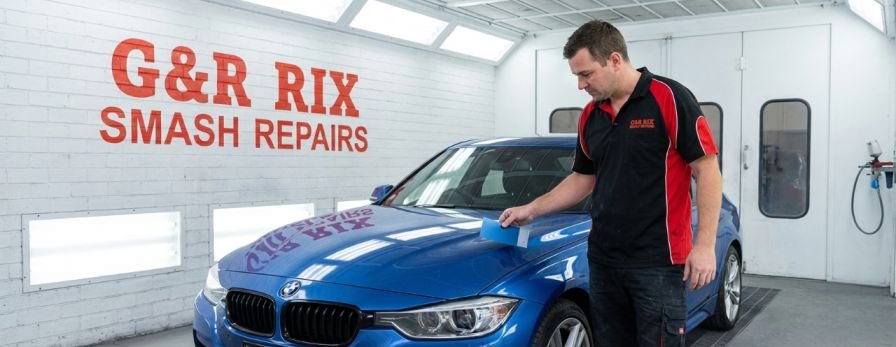
Color matching is one of the biggest headaches in car repair. Even a small mismatch between panels makes a freshly painted car look cheap or rushed, leaving you frustrated and anxious about the final result. In professional spray painting, getting the color right takes more than mixing paints. It also requires the right tools, techniques, and experience.
So, in this guide, you’ll discover professional paint matching from metallic finishes to factory standard shades. Also, understand what goes into precise color matching, why it matters, and how professional methods ensure the car leaves the workshop looking flawless every time.
Understanding Professional Colour Matching
Automotive Colour Matching Basics
Automotive paint colour matching starts with analyzing the existing paint on the vehicle. Professionals carefully assess the car’s current finish, considering age, fading, and previous repairs. They use visual inspection under controlled lighting and measurement tools to determine exact hue, saturation, and gloss. This step ensures that any new paint blends smoothly, avoiding visible differences between panels. Technicians also consider how the environment and factors like sunlight exposure affect the appearance, allowing them to adjust the mix before applying it. Accurate colour matching saves time and prevents costly repainting.
Role of Paint Codes and OEM Paint Formulas
Paint codes and OEM provide that foundation for precise colour matching. Each car manufacturer assigns a specific code for every factory paint, including base metallic or pearl finishes. Professionals reference these codes to make the exact ratios of pigments and binders needed for a perfect match. Moreover, using OEM formulas ensures the repaired panel aligns with the original factory appearance even under varying lighting conditions. This approach also eliminates guesswork, reduces trial-and-error, and maintains the vehicle’s resale value by preserving its authentic look.
Metallic and Pearl Paint Matching
Metallic and pearl paints pose unique challenges because their reflective particles shift colour depending on angle and light. Professionals address this by separating base pigments from reflective flakes carefully, layering each component to recreate the original effect. They test small panels under different lighting conditions to confirm that the shimmer and depth match the surrounding panels. Additionally, attention to particle size, distribution, and clear coat application ensures the finish mirrors factory quality. Without this precision, repairs can appear flat, dull, or inconsistent, even if the base colour is correct.
Tools and Technology for Car Paint Colour Matching
Spectrophotometer Paint Matching
When a panel comes in for repair, technicians don’t just rely on their eyes; they scan it with a spectrophotometer. The device captures the exact shade, lightness, and reflectivity of the paint, even spotting subtle fading invisible to the naked eye. Using this data, they adjust the pigment before any spraying starts. As a result, the colour sits perfectly alongside the surrounding panels, avoiding those telltale mismatched patches that make repairs obvious.
Paint Code Lookup for Factory Colour Match Car
Before mixing a single drop, professionals praise the vehicle’s paint code. This code unlocked the manufacturer’s exact formula, including base colour, metallic or pearl effect, and clear coat specifications. With this reference, the repair also replicates the factory finish, even accounting for valuation from mid-year colour changes. Following the OEM formula ensures the repaired panel blends smoothly, protecting the car’s appearance and resale value.
Paint Colour Matching Software and Digital Tools
Modern software allows technicians to preview the repair before touching the spray gun. They input the spectrophotometer readings, simulate different lighting conditions, and even test adjacent panel blends digitally. This process also reveals potential colour shapes, suggesting adjustments and the mixture or layering technique. By planning digitally first, the team reduces trial coats, speeds up the workflow, and guarantees the finished paint looks uniform and factory-perfect.
Key ways technicians use these tools:
- Compare multiple paint formulas quickly to find the closest match.
- Visualize how metallic or pearl finishes change under sunlight or garage lighting.
- Plan blending strategies across panels to avoid noticeable transitions
- Adjust pigmentation for any physical mixing.
Techniques for Achieving Spray Painting Colour Accuracy
Colour Blending Techniques
Colour blending ensures the repaired panel flows seamlessly into the rest of the car, avoiding sharp lines on mismatched patches. Technicians start by spraying the base coat slightly beyond the repair area, gradually feeding it into the original paint. They also adjust the spray pattern, distance, and overlap to control the pigment transition.
Here are the following blending strategies technicians follow.
- Feather the edges of the new paint into adjacent panels for a smooth gradient.
- Clear multiple theme quotes rather than one thick quote to prevent colour shifts.
- Match spray gun pressure and speed to the factory application.
- Use test panels to simulate blending before touching the car.
Clear Coat Blending
Applying a clear coat correctly locks in depth and creates a uniform finish. Professionals blend the clear coat from the repair area into the surrounding panel, adjusting flow and thickness to match the original gloss. This prevents visible edges, cloudiness, and uneven shine. Timing is also a critical factor. Being too early or too late can cause orange peel or streaks, so experienced spray painters follow precise curing windows to maintain factory-level results.
Fade Compensation and UV Paint Ageing Considerations
Even a perfect paint mix can look off if the original panels have faded. Professionals evaluate the vehicle’s age, sun exposure, and past wear, then adjust the pigment to compensate. They also consider UV-resistant additives and clear coat layers to prevent accelerated fading after repair. By accounting for these factors, technicians ensure the repaired area not only matches today but also stays consistent over time, maintaining a seamless appearance across the car.
Ensuring Panel-to-Panel Colour Consistency
Adjacent Panel Blending
Technicians carefully blend repaired panels into adjacent ones to reduce visible boundaries. They overlap the new paint slightly onto neighboring panels, adjusting spray distance and coat thickness to mimic the original transition. This method compensates for small variations in panel angles and lighting reflections, ensuring the eye cannot detect where the repair ends and the factory paint begins. However, precision and patience at this stage prevent uneven patches and maintain the car’s overall aesthetic.
Colour Variance Tolerances in Repairs
Even with expert techniques, minor differences can appear due to metal type, previous fading, or paint formulation. Professionals measure colour variance using tools in visual comparison under controlled lighting to stay within acceptable tolerances. They fine-tune pigmentation layer thickness and blending until differences are imperceptible. Additionally, managing these tolerances ensures repair meets both factory standards and customer expectations without unnecessary repainting.
Factory Paint Match vs Repair Paint Match
A factory paint match provides the ideal benchmark, but real-world repairs often require adjustments. Panels exposed to sun or weather change slightly over time, so technicians don’t simply replicate the original code, but they analyze the existing finish and adapt the mix to match visually. This approach also ensures the repaired panel integrates perfectly with the surrounding surfaces, maintaining a seamless look even when the original factory paint has aged.
The Professional Spray Painting Process
Surface Preparation and Primer Application
Before any colour goes down, technicians meticulously prep the panel. They remove old paint, sand the surface to uniform smoothness, and clean it to eliminate dust, grease, or contaminants. Primer is applied in controlled layers to fill minor imperfections and provide a consistent base. This also ensures the final car paint in Liverpool adheres properly and appears uniform, preventing bubbling, peeling, or uneven sheen.
Layering Paint for Accuracy
Professional painters build colour gradually, applying multiple thin coats instead of one heavy layer. Each coat is allowed to flash partially dry, so pigment settles evenly, and blending is easier. By monitoring spray gun distance, angle, and speed, technicians reproduce the exact factory hue and finish. Layering also allows adjustments for metallic and pearl effects, keeping reflections and depth consistent.
Smash Repair Paint Matching Workflow
In smash repair, color matching starts with analyzing the damaged panel, measuring the existing finish, and cross-referencing OEM formulas. Technicians test small sections first, blending into surrounding panels to check hue shifts. Only after confirming the match do they proceed with a full application. This work also reduces wasted material, prevents mismatched repairs, and ensures a seamless finish even on complex curves or large panels.
Paint Booth Lighting Conditions and Their Effect
Lighting in the booth directly impacts how colour appears. Professionals work under calibrated, high-CRI light that limits natural light, ensuring pigments reflect accurately. Incorrect lighting can hide subtle differences, leading to noticeable mismatches once the car leaves the workshop. But maintaining consistent booth conditions helps technicians detect overspray streaks or uneven blending early.
Curing and Final Inspection
After painting, panels must cure under controlled temperature and humidity to stabilize the finish. Technicians inspect the surface for uniform gloss colour consistency and smoothness. Any minor irregularities are connected with light sanding or polishing. This final step guarantees the repair meets factory standards and looks seamless from every angle.
Common Challenges in Car Colour Matching
Paint Mismatch After Repair
Even small differences in pigment or layering can make a repaired panel stand out. Professionals encounter this most often when fading or prior damage alters the original colour. To prevent mismatches, they measure the existing paint, adjust pigments, and test small sections before full application. Quick visual fixes rarely work, but precise measurement and clearing remain the most reliable methods.
Blending Car Paint Across Old and New Panels
Older panels reflect light differently due to wear, UV exposure, or micro scratches. Technicians overcome this by feathering new paint into adjacent areas, adjusting clear coat thickness, and sometimes lightly polishing the old panel to unify reflectivity. Without these steps, repairs can look patchy even if the base colour matches perfectly.
Maintaining Consistency in Different Weather or Lighting
Paint can appear different in sunlight, shade, or artificial lighting. Professionals evaluate panels under multiple light sources, often using calibrated light booths and outdoor checks. They adjust the pigment mixes or layer thickness accordingly, ensuring the repair looks consistent whether parked outside or in a garage.
Matching metallic and pearl finishes on curved surfaces
Curved panels and body lines can exaggerate small colored differences, especially with the metallic or pearl paints. Technicians angle the spray gun strategically and layer reflective particles gradually to maintain uniform shimmer and depth. They also test panels from different perspectives to catch any uneven reflections before the final clear coat.
Dealing with paint fade and previous repairs
Older cars or panels with prior touch-ups require extra adjustments. Professionals analyze fading patterns and blend the new paint to compensate for worn areas. They may slightly alter pigmentation or layer sequences to ensure the repaired section harmonizes with surrounding panels, preventing obvious “new spot” effects.
How G&R Rix Smash Repair Maintains Accuracy in Colour Matching
At G&R Rix Smash Repair, we deliver precision and quality to every vehicle repaired. Our team combines advanced color-matching technology with hands-on expertise, ensuring every repair panel blends seamlessly with the car’s original finish. From spectrophotometer scans to careful blending and clear coat application, we follow a structured process that prevents mismatches and maintains factory-level standards.
Whether it’s a minor scratch or full smash repair, spray painting, we ensure your vehicle looks flawless, preserving both appearance and value while highlighting professionalism that sets G&R Rix Smash Repair apart in Liverpool and beyond.
Frequently Asked Questions
Q1: How does colour matching work in car spray painting?
Technicians compare the vehicle’s existing paint to reference data, then adjust the mix until the colour looks identical under multiple light sources. They spray test samples, review them on the car, and refine the mix before full application. This process of car colour matching paint focuses on visual accuracy, not just formula accuracy.
Q2: Why doesn’t new paint always match old paint?
Older paint changes over time due to sun exposure, washing, and environmental fallout. New paint shows its true colour immediately, while surrounding materials may appear duller or warmer. Without adjustment, this difference becomes obvious once the repair cures and the car moves into natural light.
Q3: What technology is used for car colour matching?
Professionals use colour scanning devices, manufacturer databases, and digital paint systems. These paint-matching technologies measure colour values, compare thousands of variants, and calculate precise mixes. Technology also speeds up the process, reduces errors, and improves repeatability across different repairs and vehicles.
Q4: Can professionals perfectly match car paint colour?
Professionals aim for a visual match rather than a lab-perfect match. When done correctly, the human eye cannot detect any difference between panels. Skill, experience, and controlled conditions also make the result appear perfect in real life, which matters more than numeric precision.
Q5: How long does colour matching take?
Car spray painting color matching usually happens on the same day as painting. Simple colors take less time, while metallic or pearl finishes require extra testing and adjustments. The goal of stage accuracy is not speed, since rushing this step leads to visible mismatches after delivery.
Q6: Does sun fade affect paint colour matching?
Yes, sun exposure gradually alters paint tone and brightness. Professionals address this by adjusting the mix to match the current appearance of the vehicle, not its original factory shade. However, ignoring sun fade almost always causes noticeable differences between old and repaired panels.
Q7: What is paint blending in car repairs?
Paint blending car repair spreads colour gradually into surrounding panels, so the transition becomes invisible. Instead of stopping paint at a hard edge, technicians soften the color shift. This technique also hides minor variations and ensures the repair looks natural from every angle.
Q8: Is colour matching included in smash repairs?
Yes, proper smash repair always includes professional colour matching. Structural repair alone is not enough if the finish looks wrong. Reputable repairers treat colour accuracy as part of the repair process, not an optional extra, because appearance directly affects customer satisfaction and vehicle value.
Q9: How do I know if my paint was matched correctly?
Check the car in sunlight and indoor lighting. Look at the repair from different angles. If no panel stands out and the colour flows naturally across surfaces, the match is correct. A good colour-matching car repair never draws attention to itself.
Q10: Where can I get professional colour matching in Liverpool?
You can get professional colour matching at G&R Rix Smash Repair in Liverpool. Our team uses professional tools, controlled spray environments, and proven techniques to achieve accurate results. We also focus on visual consistency to ensure repairs blend naturally with the rest of the vehicle.
Conclusion
Overall, car spray painting color matching relies on precision, experience, and the right process at every stage. From analyzing aged paint to blending manners and controlling lighting, every step plays a role in the final result. When done correctly, repairs disappear into the original finish and protect the vehicle’s value. And that level of quality only comes from skilled technicians who understand colour matching accuracy.